Nepenthes New York and Engineered Garments 2025
※English follows below.
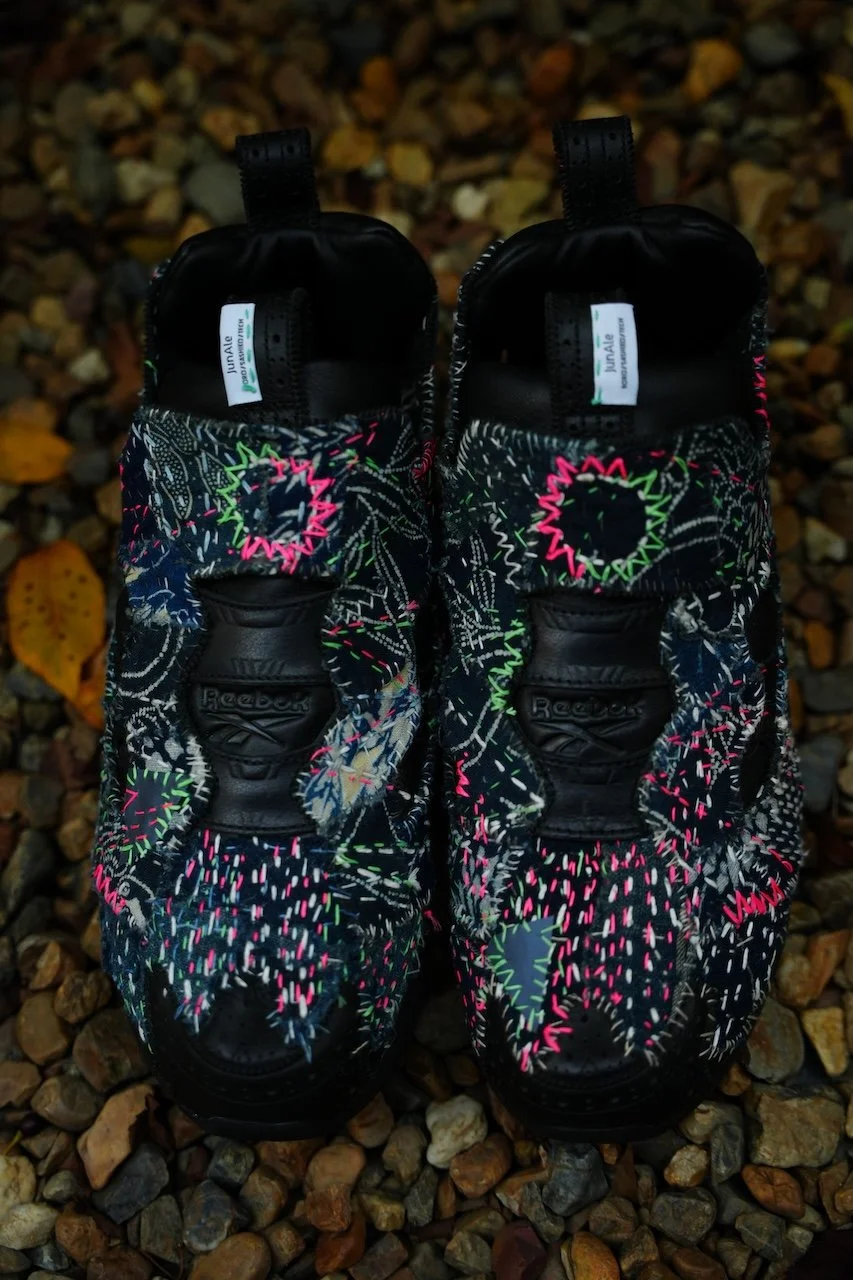
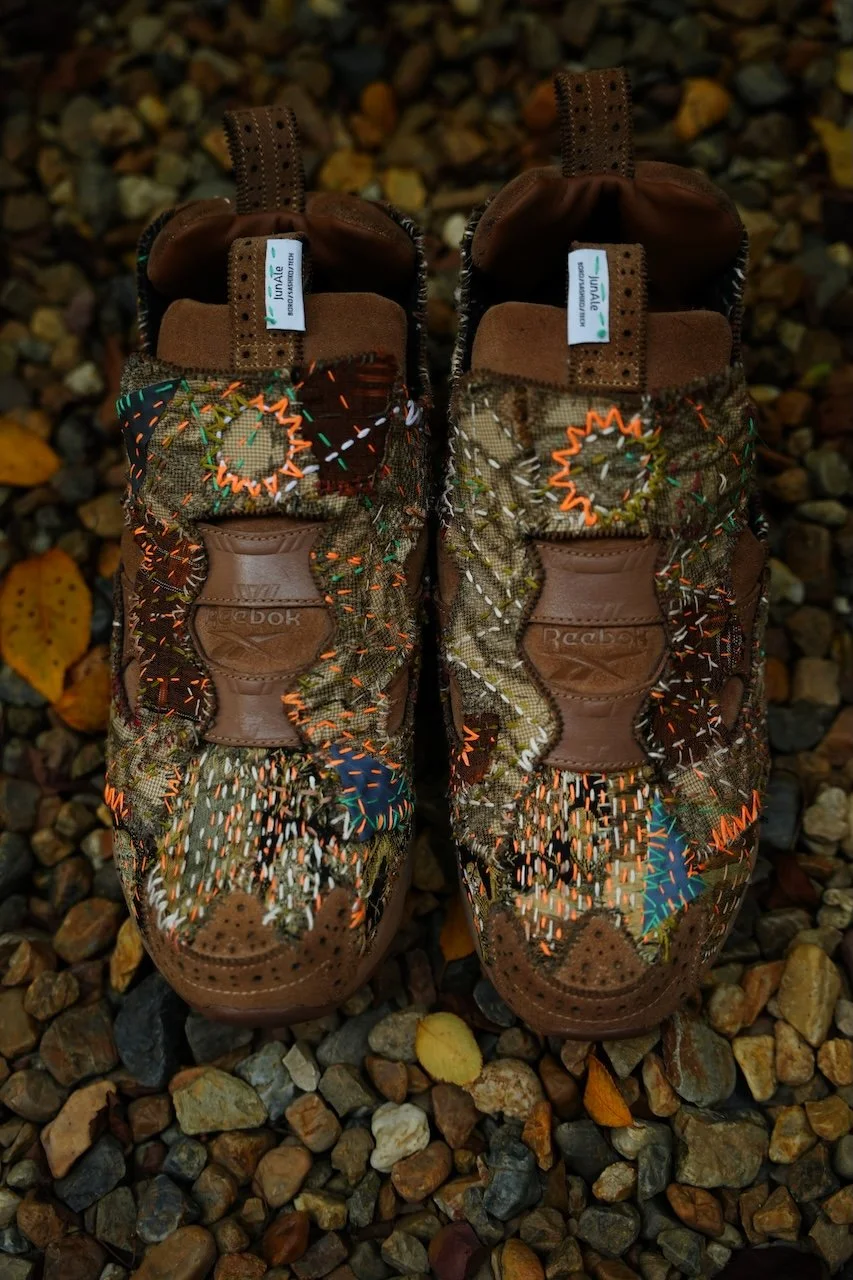
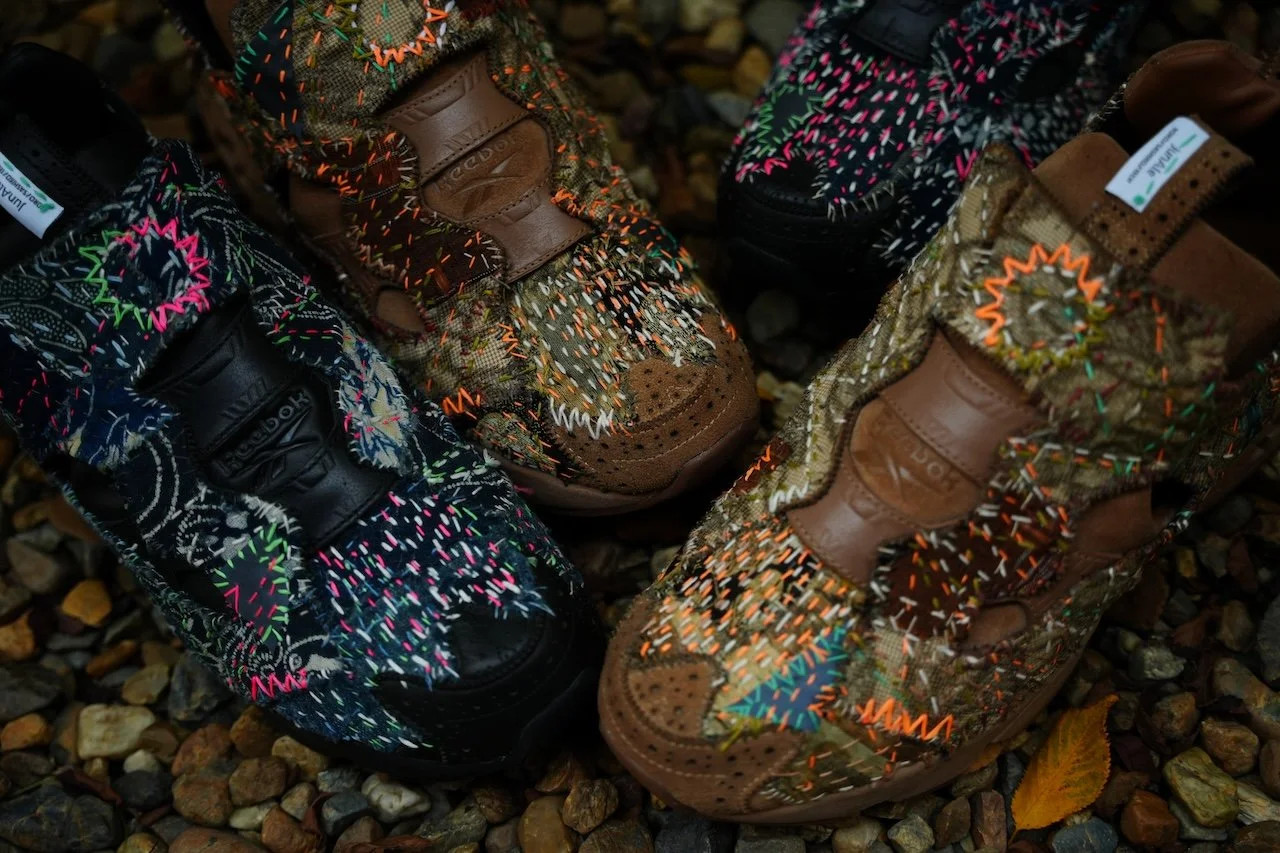
今回のEngineered Garmentsとのコラボレーションアイテムとして、リーボックポンプフューリーをベースに全面に刺し子を施しました。
僕自身初めてニューヨークに行くきっかけとなった今回のコラボ。
その時に感じたことを思い出しながら制作のことなどまとめてみました。
今年の9月、ネペンテスを訪れるためにニューヨークへ行ってきた。
ここ最近海外といえばアジア圏が多かったものの、入国して街に着いた時はもっと興奮するかと思ったがSNSの弊害か意外と淡々としていた。
お店はガーメントディストリクトと呼ばれる繊維街にあり、泊まっていたホテルから15分ほどの道を歩いて向かった。
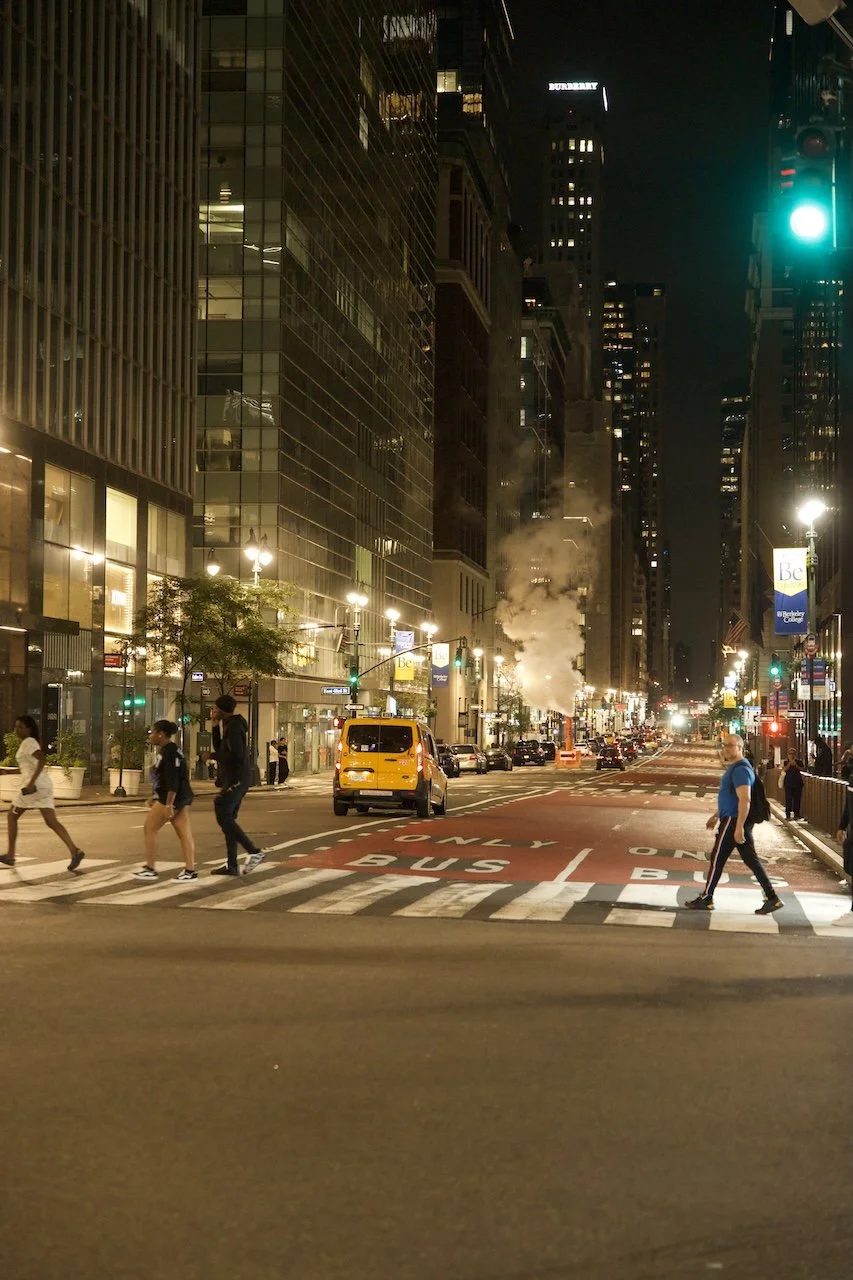
写真や映像でしか見たことのなかった地面から立ち上る湯気や、ニューヨークといえば真っ先に思い浮かぶイエローキャブ、いろんな人種が入り乱れている光景を目にし、少しずつニューヨークに来た実感が湧いてきた。
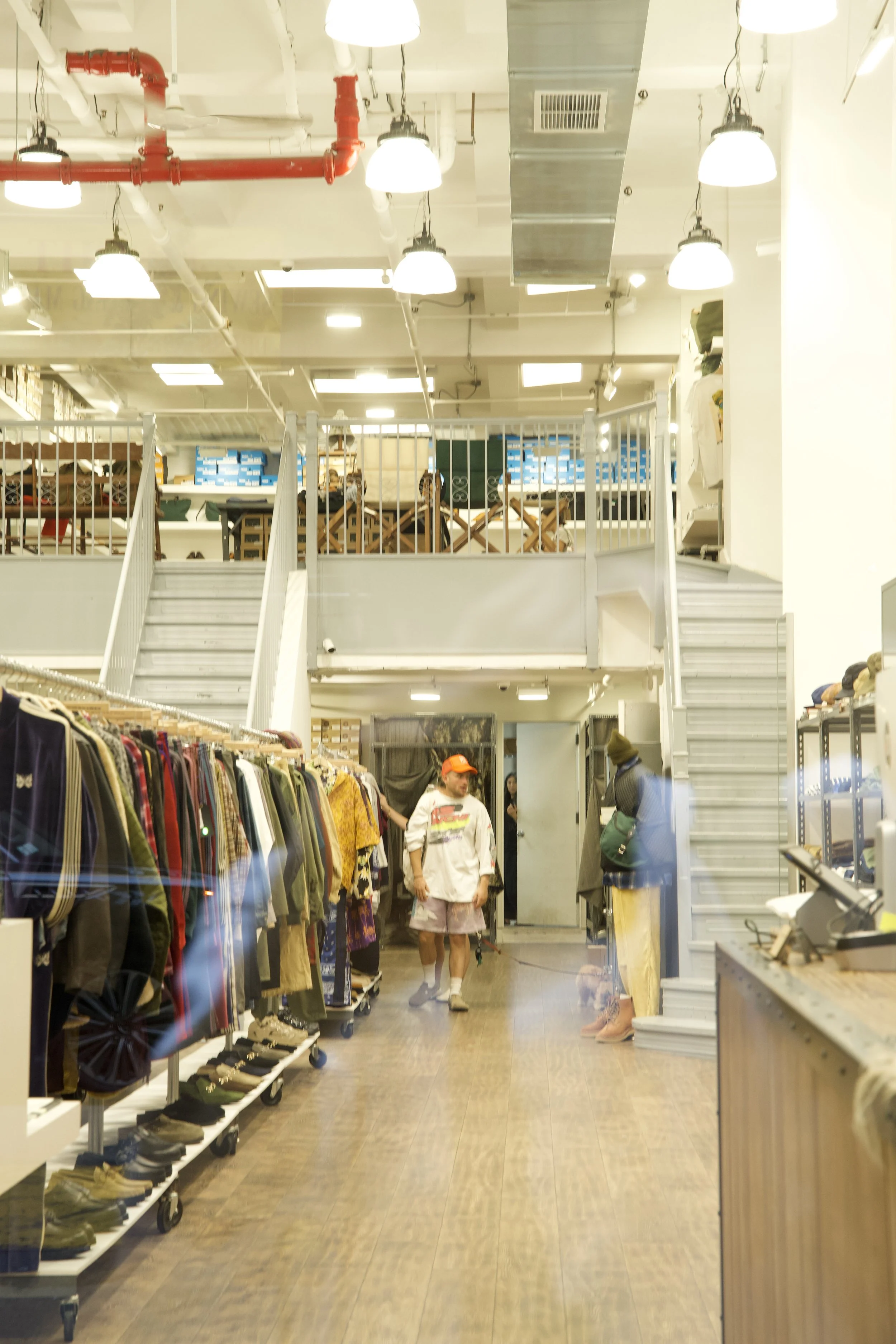
実際にお店に到着すると、マンハッタンのど真ん中に構えるその迫力に圧倒された。
リモートでお話ししていた店長のタクヤさんと実際に対面し、お店をぐるっと一周しそこから近くの工場を案内してもらいました。
工場といっても、一見ただのオフィスビルといった綺麗な外観。違う階であろうランチを抱えたヒスパニック系の人たちとエレベーターで乗り合わせ上がったところ、いきなりワンフロアで大量の生地をカッティングしていた。
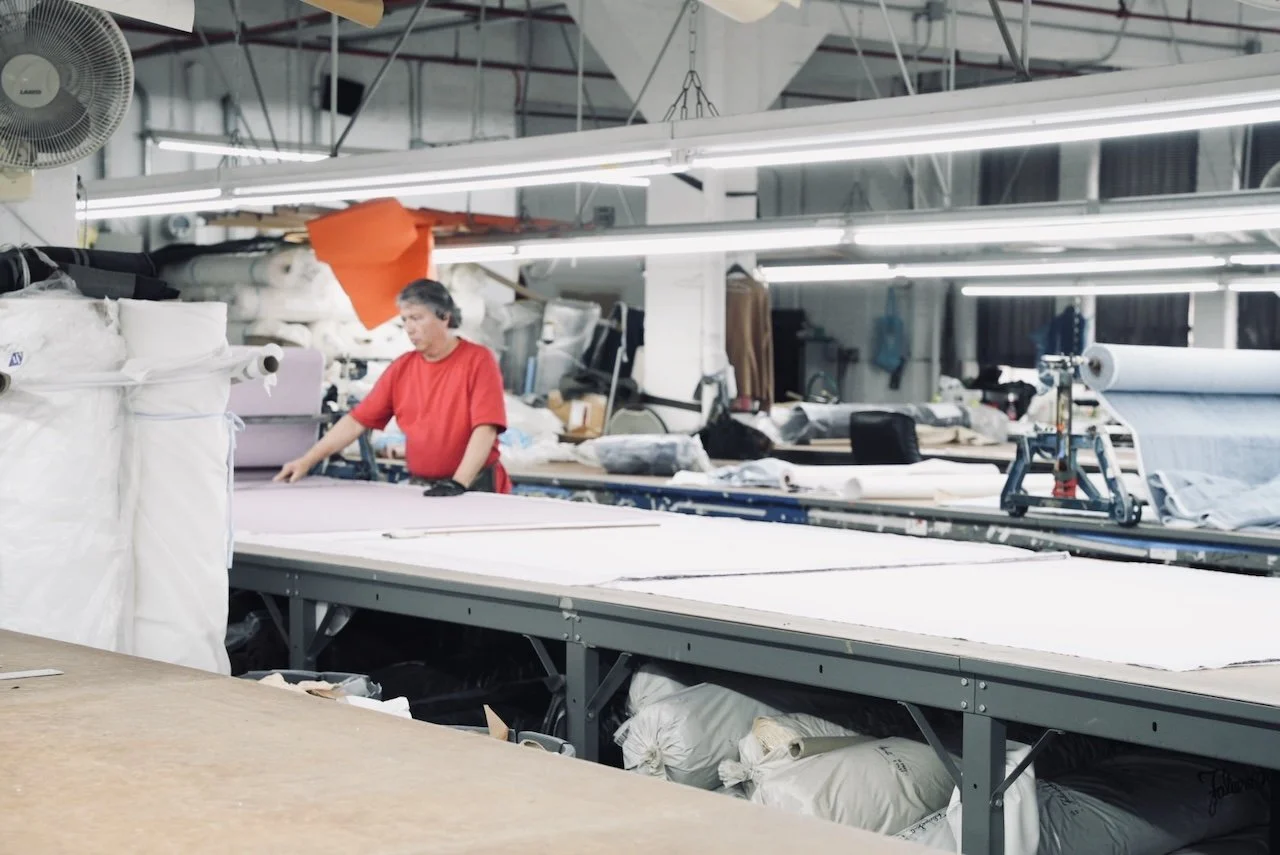
周りにはエスニックな雰囲気の生地屋やフォトスタジオが並んでいたりと、大阪の船場と堀江を足した感じかな、とか思いながら歩いて帰った。
Engineered GarmentsがなぜMade in Newyorkにこだわるのか、なぜこのエリアに店を構えているのかを少しでも肌で感じることができたのが何よりもいい経験だった。
また後日ロングアイランドシティにあるオフィスにも行き今回のシューズのお話をするために代表の鈴木大器さんにお会いしてきた。
いつも雑誌の中で見ていた方とお話するのが変な感じで(昔から一方的に知っていると距離感が難しい笑)一生懸命刺し子の説明した気がするけど正直あんまり覚えてなく、ふわふわしてました。
ただ、作品のことを全面的に受け入れてもらえてる気がしたのがすごく嬉しかった。
僕の中でEGは"クラシックな要素をモダンに再構築する"ブランドと認識していて、長く続いてるものをどう生かすかと言うのは自分も大事にしている部分。
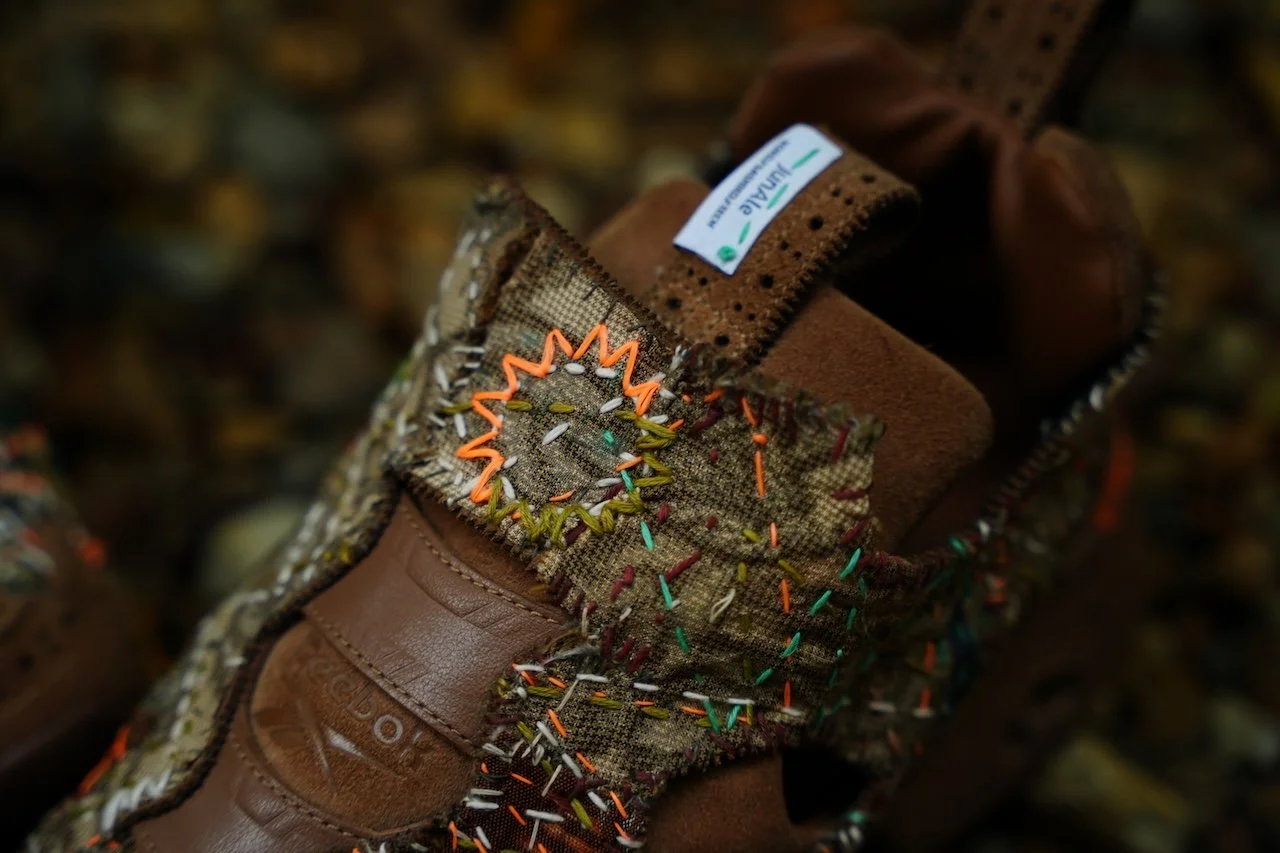
メダリオン、ピンキング、レザーアッパー、ポンプのないポンプフューリー、などすでにEGのエッセンスが詰まったテックスニーカーと刺し子がどう合わさるのか自分でも楽しみだった。
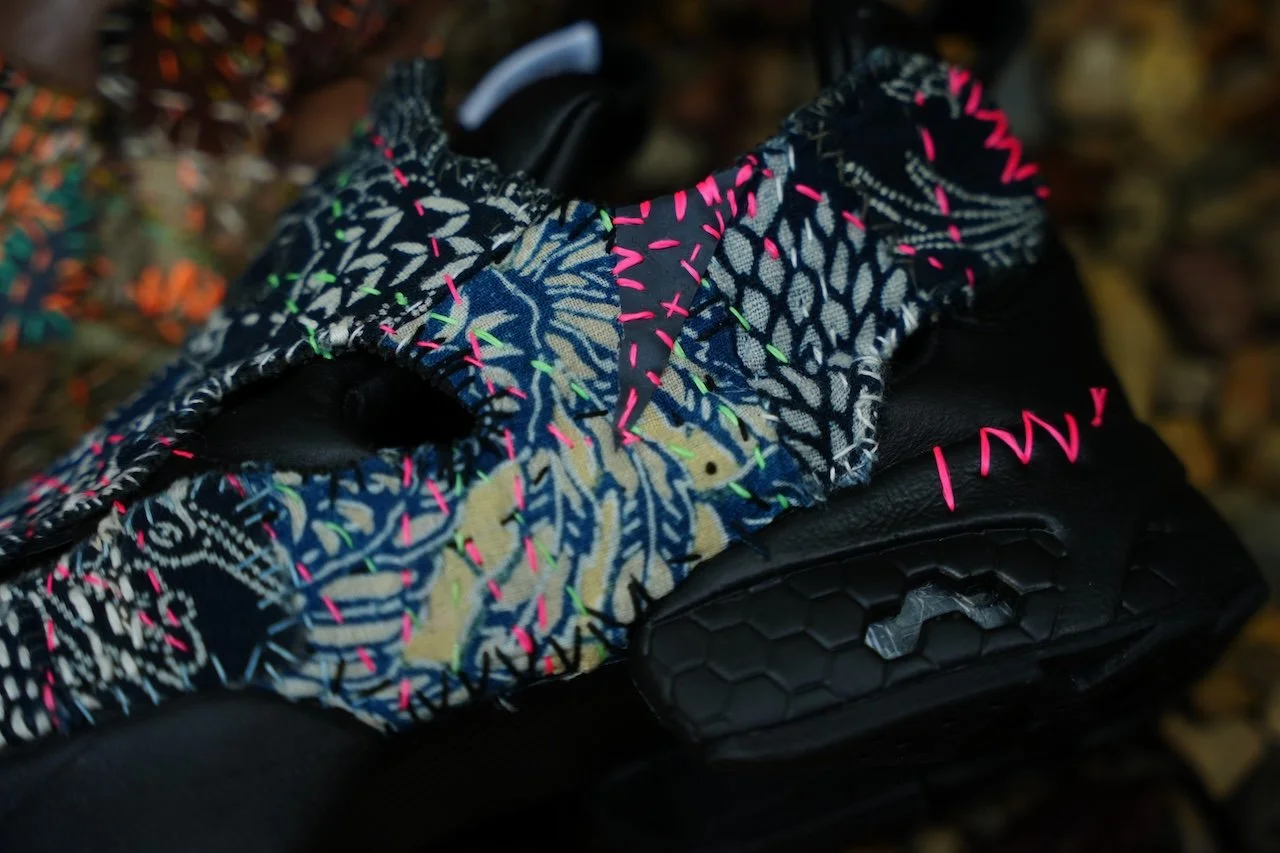
当て布には藍染め、泥染めの素材と反射リフレクターを使用し、ウェスタンな部分と日本の土臭さがうまく混ざればいいなと思い制作しました。
絵の具で言うところの何色も混ざり合って最終的には真っ黒に収束する手前のマーブルな状態。
刺し子は糸が上下に渡っていき、縫い目のそれ自体そこまで強くありません。一針一針何回も刺し重ねることで初めて強さを発揮します。
ミシンのように上下の糸でガッチリ縫い止めてる訳でもないのに使っていくうちに繊維同士が絡み合い、何十年何百年と残り続ける襤褸のように馴染んでいきます。
縫い終わって完成ではなく履いて自分と一体化して初めて完成と言えるのかなと思っています。
ネペンテスニューヨーク店に実物があるのでぜひ見てください。
https://nepenthesny.com/collections/vendors?q=JUNALE
@nepenthes_newyork
@engineered_garments
———————————————————————————————————
As a collaboration item with Engineered Garments, I created a fully sashiko-stitched sneaker based on the Reebok Pump Fury.
This collaboration also became the reason for my first trip to New York.
While working on this piece, I found myself reflecting on that experience and decided to put my thoughts and the process into words.
In September of this year, I traveled to New York to visit Nepenthes.
Although I’ve been traveling abroad more frequently in recent years, mostly within Asia, I expected to feel more excited upon arrival. Perhaps because of constant exposure through social media, the initial feeling was surprisingly calm.
The shop is located in what’s known as the Garment District. It was about a 15-minute walk from my hotel.
As I walked, I began to see things I had only known from photos and videos: steam rising from the streets, the iconic yellow cabs that instantly come to mind when you think of New York, and a mix of people from countless backgrounds. Little by little, the reality of being in New York started to sink in.
When I finally arrived at the store, I was overwhelmed by its presence—standing boldly in the middle of Manhattan.
I met Takuya, the store manager whom I had only spoken with remotely until then. After walking through the store together, he guided me to a nearby factory.
From the outside, it looked like a clean, ordinary office building. Riding the elevator with Hispanic workers carrying their lunches—likely heading to different floors—we stepped out to find an entire floor filled with fabrics being cut in large quantities.
The surrounding area was lined with fabric shops with an ethnic feel and photo studios. As I walked back, I found myself thinking it felt a bit like a mix of Osaka’s Semba and Horie districts.
More than anything, being there allowed me to physically feel—even just a little—why Engineered Garments insists on “Made in New York,” and why they choose to base themselves in this area. That alone made the trip incredibly meaningful.
Later, I also visited their office in Long Island City, where I met Daiki Suzuki to talk about this shoe.
Speaking with someone I had only ever seen in magazines felt surreal. When you’ve known someone unilaterally for years, the sense of distance can be strange (and honestly a bit awkward). I remember explaining sashiko as best I could, but to be honest, I don’t recall much of it clearly—I was floating the whole time.
What stayed with me, though, was the feeling that my work was being fully accepted. That made me genuinely happy.
To me, Engineered Garments has always been a brand that “reconstructs classic elements in a modern way.”
How to preserve and reinterpret things that have endured over time is something I deeply value as well.
Medallion details, pinking, leather uppers, a Pump Fury without the pump—this tech sneaker was already filled with EG’s essence. I was excited to see how sashiko would merge with it.
For the patchwork, I used indigo-dyed fabrics, mud-dyed materials, and reflective fabric. I hoped the Western elements and the earthy, raw character of Japan would blend naturally.
It felt like mixing many colors of paint together—right before everything collapses into pure black—still holding that marbled, in-between state.
Sashiko itself is a technique where the thread passes up and down through the fabric, and each stitch on its own is not especially strong. Strength only emerges through repetition—by stitching over and over again.
Unlike machine stitching, where top and bottom threads are tightly locked together, sashiko gradually gains strength through use, as the fibers intertwine over time. Like boro textiles that have survived for decades or even centuries, it slowly becomes familiar, worn in, and alive.
I don’t think a piece is truly finished when the stitching is done.
It’s only when it’s worn, when it becomes part of the person wearing it, that it can really be called complete.
The actual pair is available to view at Nepenthes New York, so if you have the chance, I hope you’ll see it in person.